
Optimize Your Rest with Our Sleep Calculator
Avoid waking up groggy by timing your rest with natural sleep cycles. By utilizing our smart Sleep Calculator, you can easily identify the best times to fall asleep or wake up. Our scientific Sleep Calculator is designed to calculate optimal bedtime routines based on standard biological cycles. Try this free Sleep Calculator today to schedule your rest, wake up refreshed, and boost your daily energy levels!
Interactive Sleep Calculator
Find the best times to fall asleep or wake up based on your biological sleep cycles.
Suggested Bedtimes:
The Science of Sleep Cycles
A good night's sleep isn't just about total hours. It's about waking up at the right stage of your sleep cycles to avoid grogginess.
1. 90-Minute Cycles
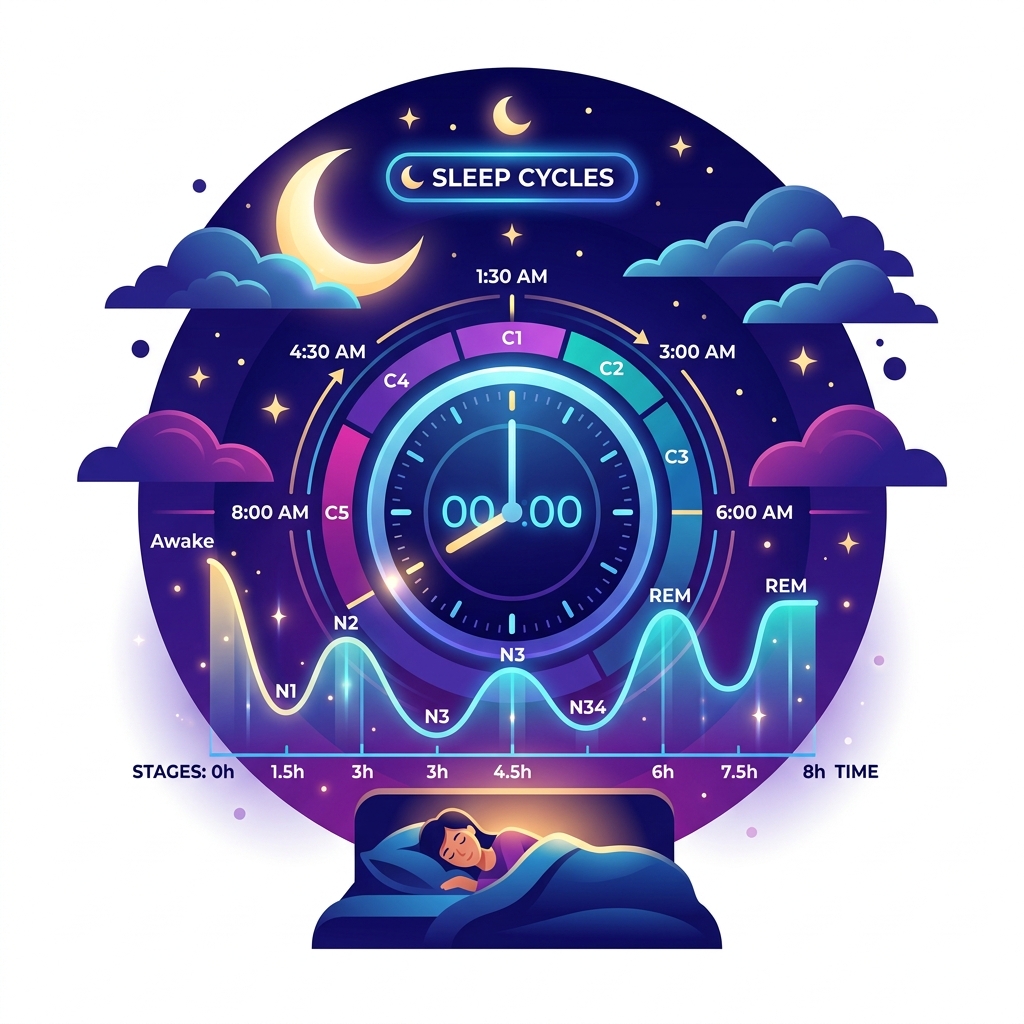
Human sleep is composed of recurring sleep cycles. Each cycle lasts approximately 90 minutes, transitioning through light sleep, deep sleep, and REM stages.
2. Waking Up Clean
Waking up at the end of a sleep cycle ensures that you wake up from light sleep. Waking up during deep sleep triggers sleep inertia, leaving you groggy.
3. Optimal Duration
For most healthy adults, 5 to 6 full cycles (7.5 to 9 hours) is the sweet spot. Consistent cycle timing establishes a reliable, healthy circadian rhythm.
Free Productivity Calculators
Quick, easy-to-use biological and financial calculation utilities from PDFZora.
Free Online PDF Tools
Edit, compress, crop, and convert your document files directly in your web browser.



Frequently Asked Questions
Got questions about sleep cycles, latency, circadian rhythms, or Sleep Calculators? Find answers here.
Q: Is my document secure?
Absolutely. PDFZora prioritizes your privacy and document security. All file uploads are encrypted using SSL (Secure Sockets Layer) during transit and are automatically and permanently deleted from our servers within 1 hour of processing, ensuring your sensitive data remains completely confidential.
Q: Can I use PDFZora on mobile?
Yes. Our free PDF tools online are fully responsive and work on smartphones, tablets, and desktops.
Q: What is the maximum file size?
PDFZora allows you to process documents up to 50MB per file for free. This generous limit accommodates standard PDFs, scanned documents, and spreadsheets, ensuring you can run compress, merge, or edit operations smoothly without any subscription requirements.
Q: What is a sleep cycle and how long is its average duration?
A sleep cycle is a structured biological sequence comprising light sleep (NREM Stages 1 and 2), deep sleep (NREM Stage 3), and Rapid Eye Movement (REM) sleep. For most healthy adults, a single cycle takes approximately 90 minutes. Cycling through these stages 5 to 6 times (7.5 to 9 hours) per night helps you wake up refreshed.
Q: How does the Sleep Calculator calculate my optimal bedtime?
Our **Sleep Calculator** performs calculations by working backward from your desired wake-up time in 90-minute increments (the duration of a standard sleep cycle). It also adds a 15-minute onset latency offset, which represents the average time it takes for a person to drift off to sleep once they are in bed.
Q: Why do I feel tired even after sleeping for a full 8 hours?
While 8 hours is often cited as a standard sleep target, it equals 480 minutes. Dividing 480 by 90 minutes yields 5.33 cycles. Waking up after 8 hours means your alarm is likely interrupting a deep sleep cycle, which causes sleep inertia. Planning for exactly 5 cycles (7.5 hours) or 6 cycles (9 hours) is often much more effective.
Q: Is the 15-minute sleep latency accurate for everyone?
The 15-minute delay is a clinical baseline. In practice, sleep onset latency varies based on lifestyle factors, daily stress, and caffeine intake. If you typically fall asleep in 5 minutes, or if it takes you 30 minutes, you should adjust the **Sleep Calculator** recommendations to suit your personal schedule.
Q: How many sleep cycles do I need to feel fully energized?
Most adults require 5 to 6 cycles per night to support cognitive function, muscle repair, and memory consolidation. Waking up after 4 cycles (6 hours) may be sufficient for some, but consistently short sleeping can build a "sleep debt," impacting focus and immunity.
Q: Can waking up at the wrong cycle stage cause long-term fatigue?
Waking up in the middle of deep sleep triggers acute grogginess known as sleep inertia, which can last from 30 minutes to several hours. Consistently disrupting deep sleep phases reduces cognitive performance, limits memory processing, and causes overall daytime sleepiness.
Q: How does blue light exposure affect my body's sleep cycles?
Blue light emitted by smartphones, tablets, and screens suppresses the secretion of melatonin, a hormone critical for cycle timing. Waking up naturally becomes harder because the body's circadian clock shifts, extending sleep latency and disrupting early cycles.
Trusted Sleep Resources
How the Sleep Calculator Helps You Optimize Your Circadian Rhythm
Do you frequently struggle with morning fatigue or find yourself waking up groggy despite spending long hours in bed? The key to waking up refreshed does not lie solely in the quantity of hours you sleep, but rather in the alignment of your alarm clock with your biological sleep cycles. By using a scientific **Sleep Calculator**, you can take control of your sleep schedule and improve your overall daily productivity.
What is a Sleep Calculator?
A **Sleep Calculator** is a simple, digital tool designed to compute optimal bedtimes and wake times based on biological sleep cycles. Instead of setting an alarm for an arbitrary time, the calculator evaluates when you will be in a state of light sleep, allowing you to awaken naturally and alertly. Whether you need to figure out when to fall asleep for a specific wake-up time, or what time to set your alarm if you go to bed right now, the **Sleep Calculator** takes the guesswork out of sleep timing.
The Science of 90-Minute Sleep Cycles
Human sleep is not a flat state of unconsciousness. Instead, your brain moves through structural phases consisting of Non-REM (NREM) and REM sleep. One complete sequence through these phases constitutes a single sleep cycle, which typically lasts around 90 minutes. Here is how a cycle breaks down:
- Stage 1 (Light Sleep): The initial drift into sleep where your breathing and heart rate slow down. It lasts only a few minutes.
- Stage 2 (Light Sleep): A slightly deeper state where brain activity begins to decelerate, preparing you for deep rest.
- Stage 3 (Deep Sleep): Also known as slow-wave sleep. This is the stage where physical repair, tissue growth, and immune restoration take place. Waking up during this stage makes you feel disoriented.
- REM Sleep: The dreaming stage where your brain processes memories, emotions, and learning, simulating daytime brain activity.
Waking up at the end of a full cycle (specifically during light Stage 1 or Stage 2 sleep) ensures a smooth transition to consciousness. If your alarm sounds during deep Stage 3 sleep, you experience "sleep inertia," which leads to mental fog, irritability, and physical exhaustion.
How Sleep Latency Affects Your Calculations
One major error people make when manually timing sleep is failing to account for sleep latency—the average time it takes to fall asleep once in bed. In healthy individuals, sleep latency ranges between 10 to 20 minutes. Our **Sleep Calculator** integrates a standard 15-minute latency buffer. This means if you calculate a bedtime for 7:00 AM, the tool doesn't just subtract sleep cycles; it adds 15 minutes to your start window, giving your body the required time to wind down and enter the first sleep cycle.
Step-by-Step Tips for Sleep Optimization
To maximize the benefits of sleep cycle tracking, consider incorporating these simple sleep hygiene rules alongside your calculation results:
- Maintain a Consistent Sleep Schedule: Go to bed and wake up at the same times every day, even on weekends, to stabilize your internal circadian clock.
- Optimize Your Room Environment: Keep your bedroom dark, quiet, and cool (ideally around 65°F or 18°C) to facilitate transitions into deep sleep stages.
- Limit Blue Light Exposure: Avoid smartphones, tablets, or televisions for at least 1 hour before bed, as artificial light blocks melatonin production.
- Calculate Your Ideal Sleep Cycles: Use the calculator tool to determine a wake time that gives you 5 or 6 complete sleep cycles (7.5 or 9 hours) for maximum mental energy.
Establish a Healthy Daily Routine
Optimize your biological circadian rhythm using our free online Sleep Calculator. Correctly timing your sleep cycles prevents morning fatigue, enhances cognitive performance, and boosts daily productivity. Pair your healthy sleep habits with PDFZora's document workflow tools to streamline your tasks and maximize efficiency.
Explore More Productivity ToolsDisclaimer: Calculations provided are for general wellness guidance and are not medical advice.